Careers
At Irrawang High School, we believe in empowering our students to discover their passions and plan a successful future. Our Careers page is your go-to resource for exploring pathways, learning about different professions, and preparing for life beyond school.
A wealth of career information for students and parents/carers is available on our career website www.irrawanghighschoolcareers.com. Students can create an online account where they can login and source information needed when applying for a job including: writing a resume and cover letter, and even information on what to wear to an interview can be found on this useful website.
Along with weekly Year 10 Career Education lessons, a wide range of services and programs are available for our students, including:
- Work Experience
- World of Work
- Work Placement
- Speed Careering
- Taster Lessons
- Workplace Health & Safety
- Career Pathway Support
- Career excursions and expos - university & TAFE
- Industry visits
The Pathways Program
The Irrawang High School Pathways Program is a school-to-work transition pathway that supports students who are:
- not pursuing a traditional HSC pathway, and are
- more inclined toward practical, career-focused learning and training.
It aims to enable students to transition from secondary schooling into work, apprenticeships, School-Based apprenticeships, traineeships, TAFE, or further vocational education with purpose and agency. This is not a traditional HSC route. Instead, it prioritises authentic workplace exposure, vocational learning, and real-world skills over academic credentialing.
Our Philosophy
This is a practical and relaxed, strengths-based learning environment.
- Students are encouraged to be self-directed about their interests
- Reflective and applied learning is emphasised
- Assessment is based on real outcomes (work output, portfolios)
- Not about exams — focused on skills and readiness
- Individualised explicit instruction for numeracy, literacy and workplace skill development
- The belief that it is important to integrate education around wellbeing, health and finance
Who is Pathways for:
- Students ready to transition early to apprenticeships or traineeships.
- Students who have struggled with attendance and adjusting to mainstream senior studies.
- Trade oriented students who require intensive skill intervention in order to transition to the workplace.
This program can support students by:
- providing a smaller, supportive learning environment
- reducing the barriers that exist in traditional classroom structures
- building employer connections
- facilitating work experience placements
- allowing flexible timetables
- explicit teaching of skills for work and vocational pathways
- creating an individual learning plan which focuses on practical, contextual learning linked to interests
- preparation for entry into vocational training
- maximising career options based on current individual skills through career guidance
- supporting early transition to apprenticeships or employment
- facilitating school-based apprenticeships
For more information please contact the school on 4987 4687.
Vocational Education & Training
Vocational Education and Training (VET) provides workplace skills, technical knowledge, and qualifications for rewarding jobs and careers. VET is the practical education option with courses designed by industry experts that combine work-ready skills with the latest knowledge.
Students demonstrate knowledge and understanding within these competencies:
- Collecting, analysing, and organising information
- Communicating ideas and information
- Planning and organising activities
- Working with others in teams
- Using mathematical ideas and techniques
- Solving problems
- Using technology.
The Vocational Education and Training courses on offer for seniors at Irrawang High School are:
- Hospitality : Food and Beverage
- Construction
- Primary Industries
- Entertainment
Each course is dual accredited with accreditation by both the NSW Education Standards Authority (NESA) and the Australian Skills Quality Council (ASQC). These arrangements mean that training is nationally recognised.
The courses are described in competency-based terms, meeting industry training requirements. They prepare students for employment and are also designed to lead (through credit transfer) into a range of post-school education and training options. Each course has a mandatory workplace learning component. Students are required to complete a minimum of 70 hours of work placement completed in two one-week blocks. Other courses that offer workplace opportunities for students include Transition Education for Students with Disabilities, Students at Risk and Career Education.
Students who are interested in researching or preparing themselves for entry into other vocations, can do so through 2 Unit Work Studies.
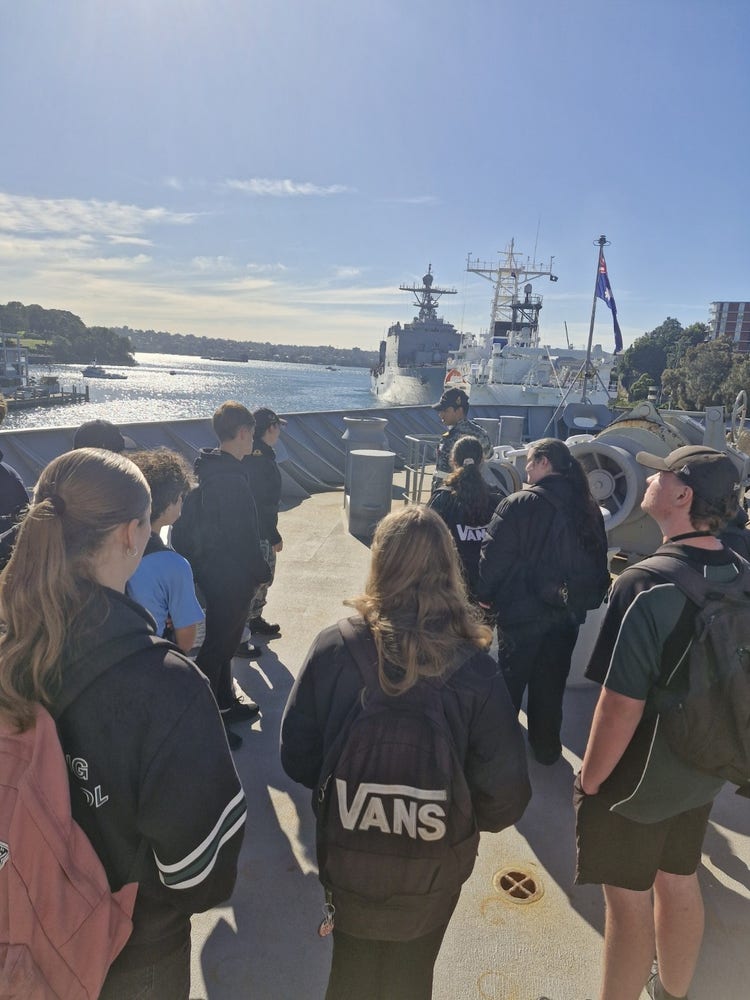
Immersion Visit to HMAS Kuttabul
Careers Advisor Mr Tonks accompanied students interested in pursuing a future in the Australian Defence Force — particularly the Navy, on a tour of HMAS Kuttabul, gaining valuable insight into Navy life, training pathways, and the wide range of career opportunities available.
This hands-on excursion helped our students explore real-world options beyond the classroom and deepen their understanding of what a career in the Defence Force could look like.
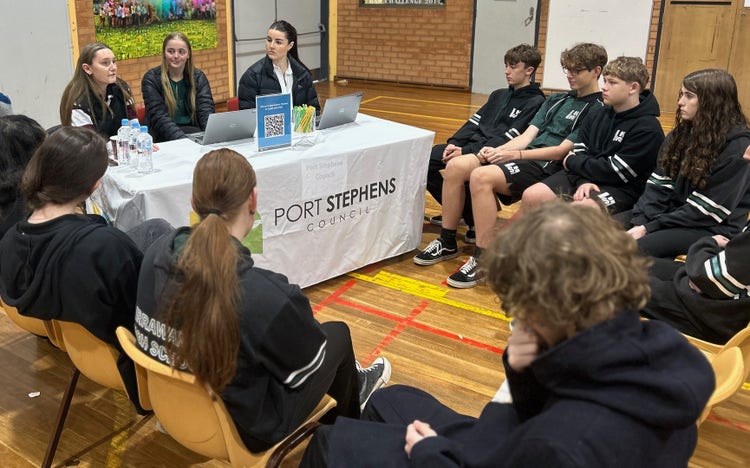
Speed Careers
This Year 10 annual program allows students an insight into many career path opportunities available.
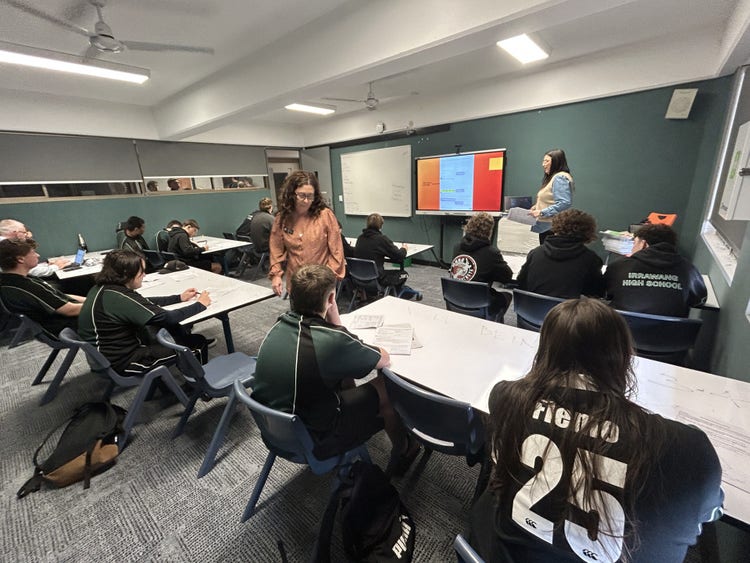
White Card Training
This is an essential qualification for anyone wishing to enter a construction site or pursue a career in the building and construction industry.
This nationally recognised certification equips students with the knowledge and skills to work safely, understand construction hazards, and follow industry standards.
The White Card course is held four times a year at IHS.
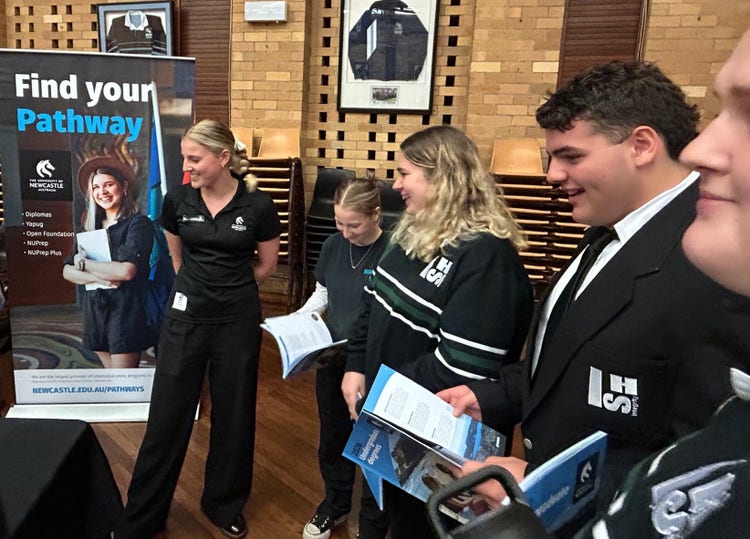
University Roadshows
Representatives from leading universities present information, answer questions, and guide Year 12 students as they consider their post-school futures.